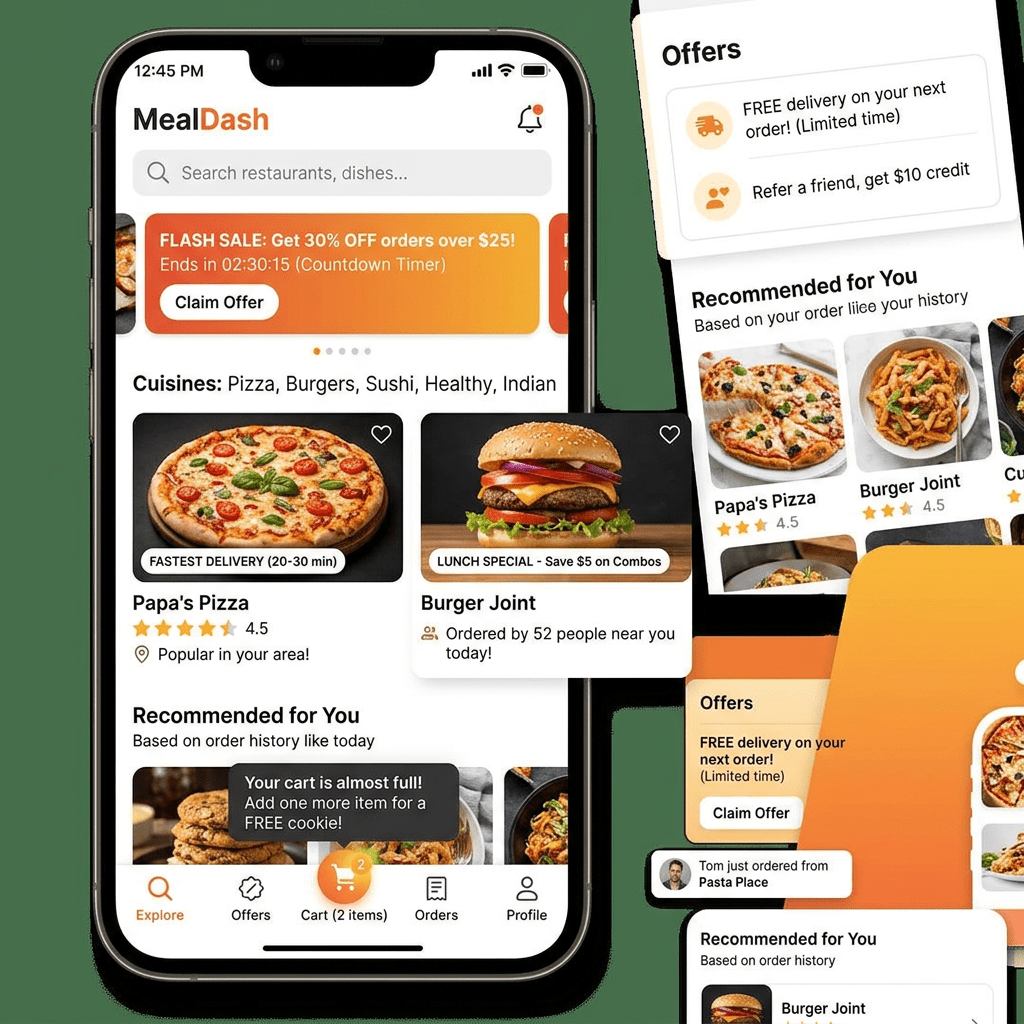
I’m not sure how many times I’ve opened Zomato just for the sake of ‘looking around’ and ended up ordering something, even though I wasn’t hungry. Each one of us has been there at some point in time. Apps such as Zomato and others, are created in such a way that impacts our decision-making processes; this is where behavioural economics comes in.
Behavioural economics is the field of economic studies, which analyses decision-making processes among humans in real-life scenarios. As opposed to traditional economics, which considers the rationality of people’s actions, behavioral economics accounts for the emotions and biases that could impact people’s decisions.
One of such biases is the countdown timer while special deals are available. “There are only five minutes left!” – everyone gets nervous and wants to order fast. Even though the deal will become available later, the countdown timer impacts our decision. It is called scarcity effect, meaning the perception of a good being rare makes it highly valued.
The other example is the “People also ordered” section. While ordering a pizza, the app recommends garlic bread or drinks, the person ordering is automatically inclined to order them under the influence. This influence is termed as a nudge. A nudge can be described as any alteration in presentation of choice of options which makes someone choose an option.
There are also applications that emphasize “Most popular” or “Best seller”. Ordering these dishes makes us feel that since thousands of people have ordered this dish before, it is bound to be great.
Discounts are yet another strategy that is used by the application to convince customers to purchase more. In most cases, these discounts are something like “spend ₹99 more to enjoy free delivery”. This actually makes us purchase more even when we weren’t initially intending to do so since the only thing that matters at the moment is to save money on delivery charges.
Streaks or loyalty rewards are also worth mentioning. The possibility to earn some points, badges, or coupons after each order motivates users to return to the same app again and again. Gradually, going to the particular application to order food turns into a habit, not a well-considered decision.
None of the above-mentioned characteristics of the apps could be considered negative. They simply facilitate the process of using apps and might help their users discover new places for having meals or to get some real discounts. But they also promote impulsiveness, when people buy something unintentionally.
In my opinion, it’s amazing how many psychological peculiarities are hidden in the process of ordering dinner. Prior to studying behavioural economics, I considered that my decisions were made independently of any external influences. However, I understand now that the apps’ interface plays a very important role in the choice of food.
When using the food-delivery app again, try to pay attention to the timers, recommendations, discounts, and notifications. You’ll see how involuntarily you participate in the behavioural economics research.
 brandwhispers.blog
Leave a comment